

Peptides: what the evidence supports
A measured look at where peptide therapy has clinical rationale — and where it does not.
7 min read
Longevity + peptides
A signal to your own pituitary. Not a substitute for it.
Sermorelin doesn't supply growth hormone — it acts on the body's own pituitary signaling. Meet online with a licensed NORBU MD physician to understand what that distinction means and whether sermorelin has a clinical rationale for you.
$29 physician visit · 100% online · Board-certified physicians · Honest evaluation
The $29 fee covers the physician visit only. Medication, if considered, and any laboratory testing are separate and are not guaranteed.
Sermorelin is not FDA-approved for anti-aging, longevity or athletic-performance indications. Many sermorelin products marketed directly to consumers are compounded and are not FDA-approved.
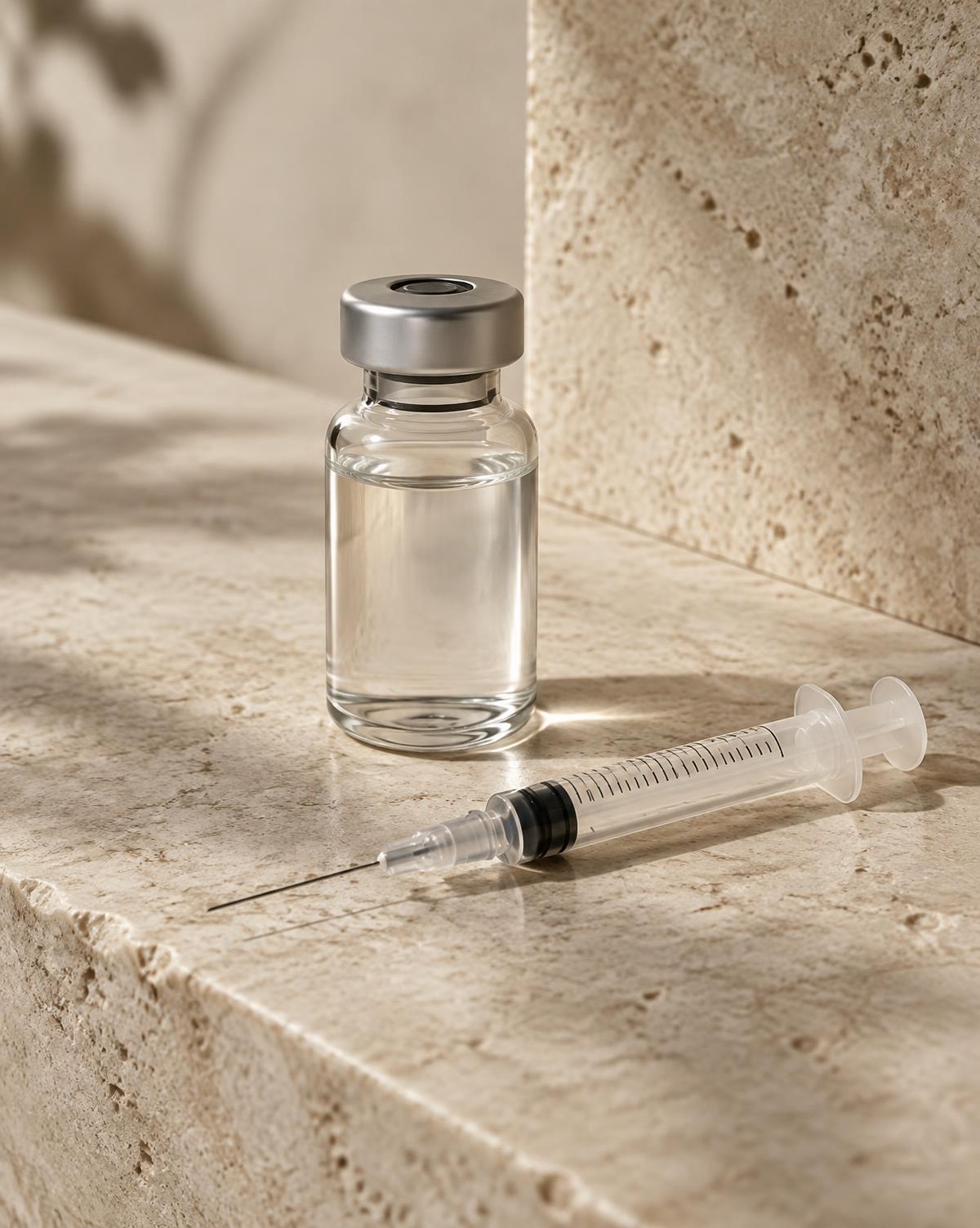
No dose, frequency, or outcome is published here. Whether sermorelin is discussed further, and what any plan would look like, is a clinical decision made with a board-certified physician.
The basics
Sermorelin is a synthetic analog of growth-hormone-releasing hormone (GHRH), a hormone the hypothalamus normally produces. It works by signaling the pituitary gland to release the body's own growth hormone — it does not contain or supply growth hormone directly.
Because sermorelin depends on a functioning pituitary gland to have any effect, its action, its limits and its safety profile differ meaningfully from directly administered growth hormone. The two should never be treated as interchangeable.
A branded sermorelin product was previously FDA-approved for a specific pediatric indication and is no longer marketed. Sermorelin products available today, including those used for adult wellness purposes, are generally compounded preparations, which are not FDA-approved.
Sermorelin should not be described or understood as an alternative way to get the effects of human growth hormone for performance or anti-aging purposes. It works through a different mechanism with different, more limited, and less established effects.
Sermorelin is not FDA-approved for anti-aging, longevity, muscle-building, or athletic-performance indications. NORBU MD does not offer it, or discuss it, on that basis.
Most robust clinical data on GHRH analogs comes from specific, well-defined medical contexts. Evidence supporting broader use for healthy aging, recovery, or performance in adults is limited and should not be overstated.
How it works
The hypothalamus normally releases GHRH, which signals the pituitary gland to release growth hormone in a pulsatile pattern. This system is tightly regulated by the body.
As a GHRH analog, sermorelin is intended to stimulate the pituitary to release growth hormone through the body's own regulatory pathway, rather than introducing growth hormone from outside the body.
Because sermorelin works upstream of growth hormone release, its effect depends on the pituitary gland's own capacity to respond. This is fundamentally different from directly administering growth hormone, and the two are not interchangeable in mechanism, effect, or risk.
Individual response varies and depends on the person's own pituitary function. No specific outcome — including changes in body composition, recovery, or energy — is promised.
Hypothalamic signal (GHRH)
Sermorelin (GHRH analog)
Pituitary gland
The body's own growth hormone release
Is it worth discussing?
Before sermorelin specifically is discussed, a physician looks at what's actually driving the symptoms or goals that led you to ask about it, and whether there's a legitimate, well-defined clinical rationale for considering a GHRH analog.
What discussing it looks like
Meet online with a NORBU MD physician and share your health history, current symptoms, and what you're hoping to address.
Your physician explains how sermorelin actually works, how it differs from growth hormone itself, and what current evidence does and does not support.
If sermorelin is considered clinically appropriate for you, your physician discusses what that would involve. If it is not, your physician discusses alternatives.
If a plan is started, your physician can follow relevant symptoms and, where appropriate, laboratory findings, and reassess whether continuing makes sense.
No specific timeline or outcome is guaranteed. Individual results vary, and sermorelin may not be appropriate or recommended for everyone who asks about it.
Safety
Sermorelin is not appropriate for everyone, and stimulating growth-hormone release carries its own considerations distinct from directly administered growth hormone. Your full medical history matters here, particularly regarding the pituitary gland and any history of cancer.
Because sermorelin products available today are generally compounded and not FDA-approved, formal prescribing information with a complete risk profile may not exist for the specific product used. Growth-hormone-pathway therapies require careful consideration in anyone with a personal history of certain tumors or cancers, and are not appropriate for everyone. Tell your physician about your full medical and family history, current medications, and pituitary or endocrine conditions. Seek medical attention promptly for symptoms such as severe headache, vision changes, or a significant reaction at an injection site.
Every prescription medication has risks, warnings, contraindications and possible interactions. Review the full prescribing information for any product prescribed to you, and tell your NORBU MD physician about all medications, supplements and health conditions before starting or changing treatment. Seek medical care promptly for any symptom that concerns you.
Understanding the product
The branded sermorelin product once FDA-approved for a specific pediatric indication is no longer marketed. Sermorelin used today is generally a compounded preparation, and that context deserves to be stated plainly.
Compounded sermorelin is not reviewed and approved by the FDA for safety and effectiveness the way an approved drug product is.
Compounding is performed by a licensed compounding pharmacy, typically to meet an individual patient's needs, based on a valid prescription.
Because the original FDA-approved indication was pediatric and that product is discontinued, adult use of sermorelin today is off-label. A physician may still prescribe it off-label when medically appropriate, but that does not make the use FDA-approved.
Every prescription medication has risks, warnings, contraindications and possible interactions. Review the full prescribing information for any product prescribed to you, and tell your NORBU MD physician about all medications, supplements and health conditions before starting or changing treatment. Seek medical care promptly for any symptom that concerns you.
The NORBU standard
NORBU MD will not describe sermorelin as an easier or safer way to get the effects of growth hormone. If it isn't the right answer for your goals, your physician will say so, and help you find an approach that's better supported.

Start with a physician
$29Physician visit
Meet online with a licensed NORBU MD physician for $29 to discuss your goals, health history, and whether sermorelin has a clinical rationale for you.
$29 physician visit
Start my $29 visit →The $29 fee covers the physician visit only. Medication and any laboratory testing, if considered, are separate and are never guaranteed.
Questions
Sermorelin is a synthetic analog of growth-hormone-releasing hormone (GHRH). It signals the pituitary gland to release the body's own growth hormone; it does not contain or supply growth hormone itself.
No. Human growth hormone (HGH) is administered directly. Sermorelin works upstream of that by stimulating the pituitary gland to release the body's own growth hormone. The mechanisms, effects, and risk profiles are different, and sermorelin should not be described as an HGH substitute.
A branded sermorelin product was previously FDA-approved for a specific pediatric indication and is no longer marketed. Sermorelin used today for adult purposes is generally a compounded preparation, which is not FDA-approved, and any adult use is off-label.
No. Sermorelin is not FDA-approved for anti-aging, longevity, muscle-building, or athletic-performance indications, and NORBU MD does not offer or discuss it on that basis.
No. Because sermorelin depends on the pituitary gland's own capacity to respond, its effect can vary considerably between individuals, and evidence supporting broader adult use is limited.
Off-label use means a medication is prescribed for a use other than the one it was originally approved for. Sermorelin's original FDA approval was for a specific pediatric indication and that product is discontinued, so adult use today is off-label. A physician may still prescribe it off-label when medically appropriate, but that does not make it FDA-approved for that use.
Reported effects include injection-site redness, swelling or discomfort, flushing or warmth after injection, headache, dizziness, and, infrequently, changes in taste or smell. Because products are generally compounded, complete formal prescribing information may not exist.
Growth-hormone-pathway therapies require careful consideration in anyone with a personal history of certain tumors or cancers, and are not appropriate for everyone. A physician reviews your full medical and family history before considering it.
Safety depends on the individual, the specific product, and its source, since compounded preparations are not independently reviewed and approved by the FDA the way an approved drug product is. Your physician and the dispensing pharmacy will identify the product clearly before you decide to proceed.
Not automatically. Sermorelin is considered only where a physician identifies a clinical rationale for your individual situation. Requesting it does not guarantee it will be offered.
NORBU MD does not publish a universal administration method or dosing schedule here. Any plan is individualized and discussed by your physician if treatment is considered appropriate.
The physician visit is $29 and covers the online evaluation only. Medication and any laboratory testing, if considered, are billed separately and are not guaranteed.
A measured look at where peptide therapy has clinical rationale — and where it does not.
7 min read

One number rarely tells the story. What a complete panel shows and why it gets re-checked.
8 min read
Meet online with a NORBU MD physician and find out whether sermorelin — or something else entirely — has a clinical rationale for your goals.